World of Speakers E.118: Michael Hingson | Live Like a Guide Dog

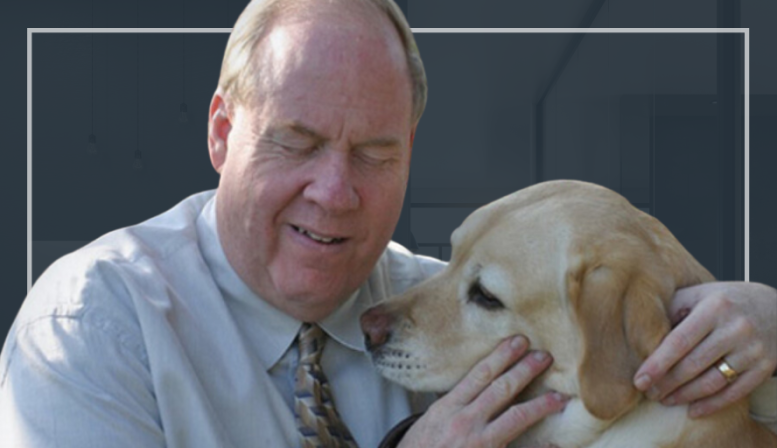
Ryan Foland speaks with Michael Hingson, #1 New York Times Best-Selling Author & Inspirational Speaker, captivates audiences worldwide with his remarkable story of survival during the 9/11 attacks and empowers them with insights on leadership, trust, and thriving through adversity.
In this episode of our podcast series, Ryan and Michael exemplifies effective public speaking techniques such as storytelling, relatability, adaptability, and authenticity, which are essential for engaging and connecting with an audience.
Tune in for an interview packed with ideas and tips on how to engage your audience, tell compelling stories, and navigate unexpected topics with ease.
Listen to the interview on iTunes or Soundcloud.
Subscribe to World of Speakers on iTunes or Soundcloud.
Transcript:
Welcome to the World of Speakers podcast brought to you by SpeakerHub. In each episode, we interview a professional speaker and reveal their very best tips and tricks. You'll learn to improve your presentation skills, keep your audience engaged, and learn how to grow your business to get more gigs and make more money.
Here's your host, Ryan Foland.
Ryan Foland: Ahoy, everyone.
I am back. We are back. Let's... Let's all come back together for another world of speakers episode. Today we have a very special guest who I've had the pleasure of meeting one time and I'm excited to get to know him a little bit more.
He is connected to me through UCI as he's an alumni. I do some work at UCI. We also have passion for the K -UCI radio.
Shout out to 88 .8.
Michael Hingson: 88 .9.
Ryan Foland: 88 .9. It's not 89 .9, right? No.
Michael Hingson: Not anymore.
Ryan Foland: KUCI.
We both had live shows and he's coming into town for a tour, a little reunion, but we figured we'd start talking about speaking because he is a speaker and he's going to speak to us today.
Michael Hingson, is that correct? How am I spelling and how I'm pronouncing the last part?
Michael Hingson: Yes.
Ryan Foland: All right. Everybody, Michael Hingson, Hingsong.
Michael Hingson: Hingson. H -I -N -G -S -O -N, Hingson. Yes.
Ryan Foland: You know what? I'd love to talk to you about names, but we'll get on to that as we continue on. So welcome to the show. How is everything right now with you? You good?
Michael Hingson: Doing well. Working on finding more speaking engagements, doing some stuff with the company. I work with AccessB in terms of helping to make Internet websites websites more inclusive and accessible. And so keeping busy every day.
Ryan Foland: I love it. Well, what we like to do here to start off the show is get to know you through a story that shaped you. So if you can give me that story, we want to hear it.
Michael Hingson: Well, I think life is all about choices. And there are a lot of choices I've made through my whole life. So I've got two, I'll tell. And neither of them needs to be very long.
But when I was a student at UC Irvine, I was studying physics. I have a master's degree in physics and one of the things even fairly early on, I constantly heard from business professors was pay attention to the details.
Even if the numbers are right in something that you're calculating, if the units aren't right, then you've done something wrong. You've got to pay attention to the details. So for example, if you're computing something with acceleration, it's meters per second squared or meter or feet per second squared. And you can come up with all the positive numbers that work the way you want. But if the units don't come out right, then you're not really looking at it the right way. So pay attention to the details. That's important because of the second story, which is that on September 11th, 2001, I worked in the World Trade Center on the 78th floor of Tower 1 and escaped with a guide dog. And the reason that I escaped and survived was because I paid attention to details. I learned fairly early in my career as someone who was fortunate enough to be able to get jobs.
And I say that because the typical unemployment rate for employable blind people is in the 60 to 70 % unemployment range. But due to circumstances and tenacity, I was able to get jobs. But when I got the job at the World Trade Center, I spent a lot of time learning all I could about the complex, where things were, how to evacuate an emergency, what the emergency evacuation procedures were, where the exits were. And I did that for a couple of reasons. The main motivation was, I needed to know it because I might very well be in the office alone because I wanted my staff out selling and supporting their man, me. And also, however, if, for example, we had people in the office for demonstrations or to discuss contracts and all that, and my salespeople brought people in, I couldn't, if we decided we wanted to all go to lunch, just say, "Oh, I don't know where anything is somebody's going to have to lead me." I have to know that because I need to take the initiative like any leader of an office would do.
So it was important for me to know that stuff again, paying attention to the details. And of course, on September 11, all that knowledge clicked into being a fact that I created a mindset.
And I didn't even really think about it. But when the airplane hit the building 18 floors above us on the other side of the building, so none of us knew what was going on, but we had to evacuate when that happened for me, it wasn't a fearful situation, although certainly I was concerned, but it was a situation where you know what to do, do it. And so having paid attention to the details, we got to the stairwell after getting some guests out and are starting down. And then I and a colleague, David Frank from our corporate office, who was there that day, and my guide dog, Roselle, got to the stairs and we started down. The other part about that all to say is, guide blind people. It's not the dog's job to know where to go and how to get there. Oh, I could teach the dog how to find an emergency exit.
What if that exit were blocked? It's my job to know where to go and how to get there to direct the dog. The dog's job is to make sure that we feel safe as we're traveling, not only feel safe but are safe.
So the dog's job is to make sure that we walk safely, but my job is to tell the dog. where to walk. Again, paying attention to details.
Ryan Foland: Okay, let's just take a breather for a second, because this is an amazing story. This is an amazing storytelling technique. You're literally helping to create this story in my mind's eye. And there's so many things to peel out here. And this idea of paying attention from physics, like it's the physics of life, the physics of everything. I recently had a key chain carabiner that broke on me. And so I had my keys, like the three different sets of keys in my pocket and they weren't connected. And those details are like a detail that I had, but I kind of pushed through because I didn't pay as much attention to what I needed to do.
And then I was in a podcast room that somebody had locked from the outside, which normally I lock. And I didn't have my keys. keys on me as I went out to get water. And then I came back and the door was locked and I was in the middle of teaching a class.
And so my zoom is stuck with my keys and everything stuck. And it's like this cascading event of like, gosh, if I just would have gotten another carabiner or connect them all together, those details and that preparation.
So I mean, literally from key chains to one of the most, you know, just sad moments to have you have to experience all that was going on. there. But your preparation, your physics, your rise over run, you knew exactly where to go. And you told Roselle where to go, which I think is really a key part here. It's your ownership and what you did.
Michael Hingson: Well, the other part about it is in paying attention to details and such.
It's also getting into habits. So for example, when I travel and speak, or whenever I go anywhere, I never, I repeat, never put my hotel key down on a counter somewhere and then I'll pick it up on the way out.
I always keep it in my pocket. I always put things in places and specifically if it's something I'm going to need, I don't leave it laying around.
My cell phone is either attached to a power cord charging or it's in my pocket. There's no. difference.
Ryan Foland: I love this. And I don't think that we all live like that.
Michael Hingson: We don't, we don't. Now, in part I do it because if I forget where I put it, then I've got a problem. So I make sure that I don't forget by having a specific routine.
So like again, when I go to a hotel room, the phone, it goes off, well, it goes to the table, the nightstand between the beds and I've got a, cord plugged in and I put it on to charge whenever I can.
But if it's not charging and if it is charging, I know right where it is. But if it's not charging, the other part of it is it goes in my pocket. I don't again leave things laying around. It's a habit.
Ryan Foland: Yeah, it's a place for everything and everything in its place. That's I think that was a Franklin quote or something like that.
Michael Hingson: Right. Right.
Ryan Foland: So have you found that this attention to detail was always been kind of part of your natural DNA or was it the physics that made you pay attention to it? Was it the professor's advice that changed everything or have you kind of always?
Michael Hingson: Well, I think to some degree always, but the professors, it was something I resonated with as soon as I heard it.
And I always thought it made sense because you can use a calculator to calculate numbers, but that doesn't get you the units, which is kind of what really started me down that.
Ryan Foland: Hold on real quick, sorry to interrupt, but not sorry. What you just said is very interesting and kind of apropos that's the right thing for today's conversation around AI. And so if I were to make up one of those, like they have on the standardized tests, if calculator, like your concept of, if you use a calculator, it's not gonna necessarily get you the units, right? right? If you use chatGPT, is it not necessarily going to get you those units? Because there's still fundamental understanding that you need in order to make it work for you.
Michael Hingson: Absolutely. And that's one of the reasons I think chatGPT and AIR is an absolutely wonderful concept,no matter what people say. So yeah, we've got a lot of kids who use chatGPT to write their papers and things like that. That opens up by the way. way, I also have a secondary teaching credential, so I can talk a little bit intelligently about this.
That also opens up an opportunity for teachers if they choose to go that route. And that is, all right, class comes in, hands in their papers, teacher knows that some people may use chatGPT.
So take a class period and have each student come up and take one minute to defend their papers. You're going to learn real quickly who knows the subject and who just used chatGPT to create their document.
Now I've used chatGPT to help write documents.
Ryan Foland: Yes.
Michael Hingson: But I always take what chatGPT does. In fact, what I do is I will actually tell it to create like eight or nine different versions.
And then I take some of all of those and then I add my words in because chatGPT, it isn't going to really be me. So I have to do that, but I really think it's a great idea and an opportunity for teach, not criticizing teachers. I think teachers are catching onto that sort of thing. You get the students to defend it. You're going to find out real quickly who knows their subject.
Ryan Foland: Well, that's the trick is just understanding that as long as people are learning and they're in that they're able to defend what they're putting together. you just maybe think of something. I always make stuff just on the show, something about the creativity of talking with people like you sparks it, but GPT, you said, you know, without using some sort of building mechanism within what it gives and adding your own input and making it new. It's not GPT ME, but like you're talking about in order to make GPT GP me, you are not just taking things literally, you're using it. as a calculator, interpreting, adding your own spin, making sure it's your voice.
And I typically will write in what I would sort of want to write as like a natural base to build on, 'cause I feel like I use chatGPT, so it's more of a chat GPME.
That's it.
Michael Hingson: Well, that's it. But no matter how much information I give it, and I'm not sure that's ever going to totally change, but no matter what amount of information I give it, it, I need to take the information that it gives me and do the final preparation of whatever I'm writing and creating by adding in other stuff to it, because I know what I'm thinking. So, I understand the units, if you will. And that's the issue.
Ryan Foland: So, all about those units. GPMe.
Michael Hingson: It is all about those units.
Ryan Foland: We should start a new app called GPMe.
Michael Hingson: There you go.
Ryan Foland: And we can empower speakers. to be able to feel authentic in their use because they're being creative and they're channeling themselves out there. Well, hey, I think we got to know you a little bit there and I want to not waste any time and get to some of the goodies when it comes to the art of speaking for somebody who, you know, uses your voice for just about everything. I'd love to just know some of your insights, some of the weird things that you're fascinated by so that we can, can evaluate our own voice and maybe use it better or think about how we approach a projection or tone or melody.
What do you think? What do you got for us?
Michael Hingson: Something that I did when I was program director at KUCI years ago, I wanted DJ on the air, the on-air personalities to listen to their shows. And I said, "I want you to record the show." and I want you to listen to the dialogue. And I did it to me, right? But I wanted other people to do it and they wouldn't do it.
So we had our engineer Dave McHugh at the time actually connect a recorder to the system so that whenever someone activated the microphone to speak, the recorder started. And then we gave people their tapes at the end of the week and said, listen to them. And the idea was, and I still do it when I speak, I like to listen to what I say. So I have a digital recorder I take, or if people make videos, that's my way of getting a video of a speech. So I don't do videos myself very well. But I listen to those. And I listened to what came across. Did people react the way I expect them to? And you can hear that Did I say what I wanted to say? Could I have said it better? For the longest time, I do that because I'm my own worst critic. And if I can stand me, then that's a good thing. Actually, over the last year, I realized wrong thing to say. We need to present in a more positive way. And I've learned that what I should really be saying is I'm my own best teacher. And I use what I hear to teach me to when necessary do better.
And if I'm totally satisfied, that's great. But even on any talk I give, I can usually find something that, oh, I could have done that a little better. Or that went okay. But, you know, I thought I'd get a little bit more reaction out of the audience for something and then I go back and study about what to do to fix it.
But I think it's important that anyone who is going to be a speaker. speaker needs to learn. It's not bad to listen to yourselves. You are always going to be your own best teacher, period. You're going to be able to do it because in reality, no teacher can teach you anything. A teacher can present you with information. A recording can present you.
But you're the one that has to teach yourself and assimilate and take that information and put it into practice. And the more of that, the you do, the more you really focus on self -analysis and looking at and internalizing what you do and what you say.
If you take time at the end of the day to kind of think about what happened during the day, the more of that you do, the better your mind becomes at doing it. And incidentally, I've written a new book, a book in 2010-2011 called Thunder Dog, the story of a blind man, his guide dog in the triumph of trust at ground zero. It was a New York Times bestseller, and that book is still available. But I wrote another book, and it's going to be coming out in August. It's called "Live Like a Guide Dog," true stories from a blind man and his dogs about being brave, overcoming adversity, and walking in faith. And what we do in that book, I realized at the beginning of the pandemic, that I talked about being not brave. I don't view it that way, but not letting fear overwhelm, or as I put it, blind me, but rather using fear as a powerful tool to help. And as I said earlier, as I told you, one of the things that happened on September 11th, because of all the things that I learned about the building and so on, I had created a mindset that says, if there's an emergency, you're going to know what to do. And in fact, it kicked in and worked out really well on September 11th because I worked to make that happen. And I think that that self -analysis, that ongoing evaluation of what can you do better helps you create a mindset that says, ah, I know what to do in different situations. I don't do what if all the time. I never hit the World Trade Center and caused the buildings to collapse. But at the same time, I knew that there had been an emergency attack on the World Trade Center in 1993, some seven years before we moved in. But at the same time, I needed to prepare and I did. So the bottom line for me was I created a mindset and Live Like a Guy Dog is all about teaching people how to learn to control fear and use it as a positive force in your life.
And I use examples of different things that I've learned from Eight Guy Dogs and my wife's service dog for many years, Fantasia, that help to learn how to control and not be blinded by fear.
Ryan Foland: Well, that's, gosh, you're just like, in Vegas, it makes me think of, you know, just walking by and hearing the ching, ching, ching, as the coins are coming out. It was just like dropping all these nuggets of gold right there.
Like, and you stack them on top so quickly, they all sort of stacked up. So I have this whole stack of gold that you just shared in front and I had to pick one or two of these things to ask you about the shine on.
One thing I will say, I resonate with this topic because I come from parents who are educators and my whole family is like, you know, just sort of been into that zone and I work in education as well as consult and work with executives.
But this idea of... of you're the best teacher, gosh, it is so powerful in so many ways. And there's so much, you know, probably science that you can point to that does it. But I think that one thing I've been thinking on lately is the difference between like intention and action.
And I feel like there's a lot of well, I'm well intended, I want to do these things, I want to improve, I want to get better. And then action is like, you know, hitting the go button or publishing that blog or putting yourself out there and doing those things. And so I wanted to know your opinion on how you get from intention to action more regularly to do this because it takes that self-discipline.
Michael Hingson: I interact with intention all the time. People always assume if you're blind, you can't do the things that they can do as a sighted person. Oh, let me help you cross the street. Let me help you butter your bread. And look, people do that all the time. The intentions are great. And if I ever react, people who are observing and say, but their intentions are good, I said, yeah, and that and $4 will buy me some coffee at Starbucks or in my case, tea. The reality is the intentions are fine, except that doesn't deal with the issue.
The issue is when do you you learn that what you're really doing is causing more of a problem than you should be? And so for me, the reality is it's nice to have intentions, but there are better ways to deal with it. So for example, when people do ask me, well, what should I have done with you rather than just doing it?
My response is ask, it never... hurts to ask questions. It never hurts to say, "Do you need any assistance?" And I should never be offended by somebody asking that question.
At the same time, where it gets offensive is if I say, "No, I don't need help," and they do it anyway. That's a problem. So the reality is it's okay if people ask.
And being educationally oriented anyway, I certainly wouldn't mind answering that I was at an event just last weekend and we were having breakfast. It was a buffet. And so we went up to the counter. I went to the counter with my guide dog who did not try to steal food by the way, which is really good. But there was a guy in front of me and he says, can I help? And I said, well, okay, tell me what there is. And he did. And so he said, "I got a plate. You want me to put stuff on it?" And I don't mind somebody helping with that.
So I said, "Sure, we got some eggs." And then he said, "Do you want biscuits and gravy?" I said, "No, I want biscuits and butter." And I figured I'd go back to the table and butter him. But he immediately just said, "I can't do that as well as he can." And he buttered the biscuit.
And that's a little offensive. He didn't ask. He didn't do anything other than just to go do it. What were his intentions? His intentions were certainly great, but his mindset was still that he could do that better than I could, and that in reality, it wasn't something that I could do. And so the problem is that people have this misconception.
For many years, the Gallup polling organization had, and I assume that they still do, they did serve of people's fears. One of the top five fears for many years back in the 70s and 80s, and I guess into the 90s, was going blind. Not becoming a person with a disability, but losing your eyesight. Because as a society, we really believe eyesight is the only game in town.
The reality is, eyesight is just as much a disability as being blind. Why? So last year I went to an event in Hollywood, and I stayed at the Hollywood Roosevelt Hotel, and I was there with a niece and nephew, and we went up and put our luggage in our room, and we were walking down the stairs when suddenly, at three in the afternoon, I hear a whole bunch of people screaming. And I asked my niece, "What's going on?" She said, "Oh, we just lost power in the hotel and the surrounding area. We were on a main stairwell, so she could see all that." And people were screaming. around to try to find a smartphone or a flashlight or something.
The light went out. Look, Thomas Edison invented the electric light bulb back in 1878, at least we give him credit for it. So why did he do that? If we use the parlance of the Americans with Disabilities Act of today as the guide for that, it is because we needed to create a process to have light on demand for light-dependent people who couldn't function in the dark who couldn't function in the dark. who couldn't function in the dark. The reality is that we needed to create a process is that light dependence is much a disability as light independence for so many things that are constructed today that require eyesight to do them.
But the fact of the matter is that the only difference between you and me is that your disability is covered up because we have spent so many years and so much time creating better ways of having light on demand. It doesn't change the fact that you have the disability of light dependence. So we need to change disability's definition. People tell me, well, but disability starts with DIS, which means a lack of ability. And my response is disability does not mean lack of ability. If that's the case, then what about disciple or discreet or discern? Those don't happen to be negatives.
What's a disciple? A lack of... hypo? No, it doesn't mean that. Disability is a characteristic that we all have, and it manifests differently for different people. Period.
Ryan Foland: Preach, preach, preach. I'm going to just give a little round of applause for that. So, all right, so hang with me here, Michael, because I've, I was listening, I've got like a, kind of a direction of questions and relating that on top of it.
I want to get your opinion. So, this idea of intention intention versus action and even when things are intended well they can have like a different reaction.
The goal to any type of sort of action would be asking and your story is about other people asking you. We're on the same page about you're your own best teacher and if we now look at somebody a speaker with themselves as the pair are they well and intended to listen to themselves and to put in the work and to do these things, or are they not ready for it? And do they have to ask themselves, hey, do you really want to improve your speaking? Because there is some sort of like, maybe they're not having that internal conversation within themselves to put in the work by learning, by doing, by knowing the metrics and knowing the data, the digits, the the units.
Michael Hingson: So the issue is, if you're going to be a speaker, and you're going to make that a profession, like anything that you do with a profession or a vocation or even an avocation, you should want to become the best that you can be, right?
Ryan Foland: Yes, but some people just want to be like everybody else or they're following a track or..
Michael Hingson: No, no, no, I understand that, but if you're going to truly take it on as a task that you're going to do for your world…
Ryan Foland: Yes, and the world of speakers start to interrupt, but for the world of speakers--
Michael Hingson: And the world of speakers.
Ryan Foland: We're talking to you right now, if you're listening to this, here you are.
Michael Hingson: So if you really want to take that on as something you're gonna do, then you should want to-- make yourself be the best that you can. Like what we did at KUCI when we had people listen to their own shows. By the way, the outcome of getting people who we pushed really hard to listen to their shows was that by the end of the year, they were incredibly better. Some of those people went on to get professional jobs in radio and television and broadcasting and other places where they and were more… better speakers because they took the time to listen. And the reality is, if you are going to take on any kind of a job, you should want to be the best that you can be.
If you just want to be like everyone else, then you will be like everyone else and you won't get that many jobs. So the bottom line is, if you want to be a speaker, you've got to put in the effort.
And for me, part of that means I need to to listen to myself because I need to hear what everyone else hears and I need to understand how if it's possible and it usually is how if it's possible to make what I do better and I think that's true of anyone who's going to be a speaker that you need to really take the time to listen to you else, it is isn't just standing in front of a mirror and giving a speech and practicing that. You've got to do the other half of it, which is listen to what you did when you were standing in front of the mirror. You've got to record it, you've got to listen to it, and then do it again until you're comfortable with it. That's crucial. Otherwise, you're not going to be successful.
Ryan Foland: Yeah, and I will say that some, I know a lot of people who listen to this, they have a full-time job or a number of things they do and speaking is in addition to it. Like for me, I've always spoken and I've had a full -time job and done different things. So especially if you're making that full commitment to go all in to make it happen, but you would only make that commitment, hopefully, if you really are excited that this is something that you're going to dive into.
Michael Hingson: But take it a different way. So you got a full-time job and speaking is just kind of an adjunct because it comes up every spring.
And so you're not going to take it on as a full location.
Ryan Foland: Well, for me, in my particular, I just, we can do an example of someone hypothetically, but for me, I run an entrepreneurship center and then I do consult and I speak and I've done that for almost eight or nine years now as kind of a double life.
So I'm able to, I have this overlap as well, which I think is important where what I do at my job also helps me practice in these things. things. But let's just take somebody who is not me for a hypothetical.
Michael Hingson: But no, no, no, that's okay. Take it, but go now, go the other way though. You do wanna speak.
Ryan Foland: Yes.
Michael Hingson: And so when you take the time to hear what you do and learn from it, that's gonna help you in your regular job as well, because it will make your communicator.
Ryan Foland: Well, absolutely.
Michael Hingson: So it benefits both ways. So it isn't just becoming... a professional, better speaker by really taking the time to hear what other people hear.
Ryan Foland: Very true.
Michael Hingson: That's the issue, whether it's a speaker or something else.
Ryan Foland: Yeah, yeah, take speaker out of it. Just being a better communicator, if you were able to understand and hear yourself back. Now, Michael, I have, I have something, a story I want to get your spread on here.
And the idea here, I want you to think about better, which you've clarified, doing this will make you do better. But I'm going to ask you about the concept of better, better. So here's my quick story.
Toastmasters. I've been a Toastmaster for a long time. And I've competed in the tall tales all the way up through the district. I won the evaluation contest, I did the humorous contest, and that was fun. And I like, I enjoyed the competing, but I've done it for years. but never have done the international one, which is the motivational one, which is the more of a short inspiring kind of thing.
And I just, I just never put my hat in the ring for it. So this year I was like, all right, I'm gonna push myself, I'm gonna try it, I'm gonna put it together. I did it and I felt really good about it.
And I feel really good about my delivery and I disqualified because I was just a couple seconds over. And I got the recording sent to me, but I have not listened to it.
And I sort of want to, but there's like part of my internal is like, like, ah, like, I don't know if I can go and make that time to even watch it again, even though I know it's there and I know it's gonna help me. So like, so the one question is like, if I were to do that, that would make me better.
Michael Hingson: But it gives you the opportunity to be better.
Ryan Foland: Yes, but here's the thing though. Because I did that in a couple seconds, I forced me to come up with it and actually have it.
And I didn't win. I was like, okay, not my time, that's cool. But then I had a chance to speak for the, what it was called the future summit, the Her Future Summit.
And it was this international conference online where I was able to give, you know, I had this time slot and I took the same talk that I gave and I gave it a second time and I extended. And I gave myself more time and I really, felt better about it and that one I felt like I got better but I didn't listen to it so I wanted to know it's one thing to get in front of the mirror to do better but it's almost like there's a better better right that if I now go back and watch it and chase down the video of the second time I did it and watch them damn the next one is going to be that much better but right now that's just in my mind it's like a whole bunch of more time and it's kind of better better. So this idea of better versus better, better versus better, better, better, better. And then it's like, that's it, chasing after your greatness. Thoughts on that.
Michael Hingson: It's a question of priority.
The reality is that, as you said, the second time you did it, you extended your time, by the way.
Ryan Foland: Yes.
Michael Hingson: And the issue is, if you ever want to go back and do the international one again, you're going to have to figure out how not to extend your time, but actually cut a few seconds off. off, which I'll bet you can figure. Oh, easy.
Ryan Foland: Yeah.
Michael Hingson: But the issue still is that listening to the talks that you give with the idea that you want to see how you can improve them and how you can enhance them is the important part.
Ryan Foland: That's a golden egg right there. That's it. That's the golden.
Michael Hingson: That's the golden egg right there. You have to do it with, hey, here we go with the word again, in 10 And then the action is you actually do it.
And you don't necessarily even list to it just once, but rather you have to take the time to do it if you feel you're gonna get something out of listening to it. You haven't yet apparently decided what you'll get out of it because you haven't done it.
You haven't considered it a priority, but you have to do that.
Ryan Foland: Right. So I think that my takeaway here is that like, I really am chasing after being my best speaker.
And I know it's stage time and practice time and at bats that'll help it. This has helped me to think a lot more about how like, if I'm, I'm doing, I'm getting to be a better speaker, 100%. Even this has helped me by talking with people like you and learning and I'm trying to get better. But you reminded me of something staring me right at the face. that when I am intentional about doing better, I can prioritize to do better and better and better with things that have already happened. It's not about doing more. It's about also being like, hey, I could spend more time evaluating what I have done as a way of what I'm going to do being better, better, better, better, better, better, better, better, better.
Michael Hingson: But you know, it's really fun and I do it in case As I said, I record talks. I've gone back and listened to earlier talks. And I'll compare an earlier talk with a later talk. And sometimes from the early talks, I would, oh, I forgot to include that sort of thing. And they really liked that. But I don't do a lot of that these days, but I do it sometimes. It's fun.
Ryan Foland: Like a throwback Thursday, maybe once a Thursday, throwback Thursday. and look at some of the old, old stuff, like that's good.
Michael Hingson: But the reality is it's an action that you have to be intentional about taking.
Ryan Foland: Yes, and when in doubt, whether it's with someone else or yourself, it's okay to ask.
Michael Hingson: It's always okay to ask.
Ryan Foland: Always okay to ask. And maybe you have to ask yourself, am I able to do this right now? Maybe it's not a priority, but then it's not something that you're not. doing wrong. It's something that you just, you know you need to do when you have the time for it. And then priorities raise and lower, and it's just, yeah, time.
Michael Hingson: Well, and I am of the opinion that usually you have to take it. You know, you don't have to sit and do absolutely nothing perhaps while you're listening to the speech. You can listen to a speech while you're eating dinner, for example, instead of watching mash or jeopardy or something. like that, yeah, just examples.
Ryan Foland: Well, here's the thing, but also like, and this is, I mean, this resonates with me. I have three podcasts that not only I record, but I very rarely feel like I have the time to go back and listen to them.
I'm focused on like, on creating them. So maybe it gives me more time later to review them or something..
Michael Hingson: But well, yeah, it's a choice. It's everything like I said a lot earlier life is about choices and we have to decide what really works.
Ryan Foland: I love I love how simple and powerful that is by the way, like you know, I Always say people look for hacks and apps and all these things like you know What's that? What's the shortcut and it's like well? No, there's no hacks or apps It's just like the simple you want to do it make a choice be intentional do the work.
What else you need to know? Yeah, that's it.
Michael Hingson: Okay.
Ryan Foland: Well, here's what we also need to know. We need to know from you about how you have had success in building your business and creative outreaching with your business.
We've all struggled with the pandemic that sort of chopped our speaking legs off digitally and virtually with a few bricks in the face. We kind of had to all reorganize and now I feel like things are back towards a growing pattern.
So what has worked for you? What hasn't worked? You can choose whatever you want 'cause we don't know what's going on even have enough time to unlock all the gold here.
Michael Hingson: Well, I was very blessed that I began speaking pretty much right after the terrorist attacks on September 11th.
On September 14th, I had the first of five appearances on Larry King Live and people started calling me after that and saying, "Would you come and talk to us about what we should learn from September 11th and we want to hear your story and other things like that?"
Ryan Foland: And he just... got thrown into it. You just got thrown into the lines then.
Michael Hingson: I got thrown into it. So my wife and I talked about it and we decided that if it would really help people move on, if it would help people become inspired, if it would help people learn about blindness and so on, it was worth doing. And as I tell people, I decided I was gonna start selling life and philosophy rather than selling computer hardware. And that's what I did.
So, and look, the very first... public speech I gave came about because a couple of, well, about a week after September 11th, a pastor of a church in New Jersey called me because we were living in New Jersey.
And he said, we're going to be doing a church service, an ecumenical service for all the people who were lost so that we could remember the people from New Jersey who were lost on September 11th. And he said, I would really like you to come and tell your story. And I said, okay, hadn't spoken in delivered a speech like that before, obviously, having been on radio and other things. So I was not totally shy about doing it.
But I said, sure, I'd be glad to. And I asked him, how many people are going to be at the service? Do you have any idea? He says, we're doing it outdoors, it'll probably be about 6,000.
Ryan Foland: Oh, my God, that's a big thing.
Michael Hingson: And that was my first speech.
Ryan Foland: Wow.
Michael Hingson: That was my first speech. So, you know, the reality is, so one of the big fears people seem seem to have today is doing public speaking. Why?
Audiences are generally not going to be against you. We're going to stay away from politics and controversy, but audiences are there to learn. They want to know from you,
and you have to learn how to connect with audiences and to get them to embrace what you're saying, react to what you're saying, and so on. And I've learned how to do that sort of stuff.
But I spoke for a number of years, then the pandemic did hit. And also in 2022, my wife became ill. So I really didn't do much public speaking for three years from 2020 through 2023. So four years, I did start a podcast called Unstoppable Mindset Were Inclusion Diversity in the Unexpected Me.
Ryan Foland: Nice. Wait a minute. Let's just, for accessibility, let's say that again, a little slower. So if people hear it.
Michael Hingson: Well, and, and I I want to say why it's that way Okay, it's unstoppable mindset we're inclusion diversity and the unexpected meet the reason It's worded that way is that if you talk to most people about diversity they talk about race sexual orient and gender and never talk about disabilities and I won't let people leave out disabilities if they're gonna truly say they're inclusive. Well, what we do include race and so on but you don't include this I've been to diversity conferences where disabilities are mentioned maybe once or twice. They're dealing with all the other stuff.
And we're left out, we're left out. So anyway, it's unstoppable mindset. We're inclusion, diversity and the unexpected meet. And the unexpected is anything that isn't diverse, Well, inclusion or diversity related, which is most stuff.
Ryan Foland: Now real quick, while we're here, just also how's the best way to contact you? I'm going to ask-- you in the end too, but I wanna give people a chance just to hear it twice.
Michael Hingson: The best way is to email me at speaker @MichaelHingson .com that's S -P -E -A -K -E -R at M -I -C -H -A -E -L -H -I -N -G -S -O -N .com or they can go to my website, www.MichaelHingson.com. They can learn about the podcast by going to www .MichaelHingson .com /podcast.
Ryan Foland: Yeah.
Michael Hingson: And on all 228 episodes to date since August of 2021 are there.
And so people can listen. And of course, I hope that if anybody listens wherever they listen, they will give us a five -star rating. We really appreciate the ratings. But they can learn about me on MichaelHingson.com.
They can contact me there or they can contact me through speaker at MichaelHingson.com. I did mention that I also work with the company called AccessiBe that makes products to help make internet websites more inclusive.
That's a podcast in of itself, but it's michael@accessibe.com, but probably people will more easily remember speaker@michaelhankson.com.
Ryan Foland: Yeah, we'll remind them once at the end. So we've got a few minutes here, and I wanted to pick your brain on kind of some straight. and things that you're thinking about doing as you get back up on the speaking horse and sort of how you look to build relationships and get in front of stages and are you a bureau guy, just maybe a little bit more of your thoughts, projections as we all continue to build our business.
Michael Hingson: I have not had a lot of success in getting speakers opportunities through bureaus, even though people say you create a great story and be great.
If they're not booking, then I'm I don't know what the deal is. But I have worked to become a lot more familiar with LinkedIn. I think that's one great place and a lot of us and so on. Putting up more posts about being a speaker and what I talk about last weekend, I spoke at the Marshfield, Missouri Cherry Blossom Festival.
Ryan Foland: Nice.
Michael Hingson: And I was fun.
Ryan Foland: Tell me about that. Was it like an actual Cherry festival?
Michael Hingson: Well, not as such. It's an event every year that's historically related, mainly, well, not even necessarily totally from Missouri but it's historic related. So they do a lot of interviews of descendants and relatives of presidents and other people from history. Last weekend, there was a discussion about JFK's assassination. And one of the people who was there was a gentleman. gentleman who had been at the time a secret service agent. He was in the second car behind JFK when he was assassinated.
And he hadn't been able to talk about it for 45 years. And then 15 years ago, he started talking about it. And he was there to speak. There was a great grandson of Ulysses S. Grant, grandson of Harry Truman, the great granddaughter of Dwight Eisenhower.
Ryan Foland: And that sounds awesome, by the way. That's…
Michael Hingson: Oh, it's a lot of fun. And so I was invited to come and speak. I also won an award, one of the Ella Dickens medals, literacy medal for writing a book. And so I got that. And of course, then I gave a speech all about September 11th on Saturday afternoon, which was a lot of fun. And people can see that speech if they go to the Marshfield, Missouri Cherry Blossom Festival page or if they email me, I'll send them a link.
Ryan Foland: Very cool. Very cool.
Michael Hingson: Yeah. Oh, it is. It's pretty fun. It was a lot of fun. So let me, let me go back to your question though. So I'm doing more with LinkedIn, especially some on Facebook, but I think LinkedIn is a great place to get to corporations, to get to organizations that may very well want to speak on LinkedIn. It's not all about selling. It's, for me, saying something that will inspire people or motivate people to think, "Oh, maybe he can help us." So I do that. I do some on Facebook. I'm also finding various places where I can get calendars or access to possible events.
So I send out a lot of letters. I send out like 100 letters or 200 letters a day. I've got a way to do that. But I send each letter out individually. I don't just use some email tool to do that shoot out a bunch of letters. So everyone, I actually send out in person when I'm at home.
Ryan Foland: Oh, wow.
Michael Hingson: And I do that. So we're getting some results from that, but it's all about being visible.
And you gotta put the time in to get the events. Now, when live like a guide dog comes out, if it is as visible as I think it will be, if it is anything like what happened with ThunderDog, then that will be good. also help the speaking career generate more opportunities and so on as well. And maybe some of those speakers' bureaus who have me on their pages will decide that we might be relevant for something they're doing.
Ryan Foland: You know, you talked earlier about the "dis" part of the word "disability" and I'm I mean, it's like your ability to back to this idea that we all are disabled in different ways. And this whole idea of being disabled when the lights are out, like, it is a real, we're talking one of six senses.
And I think that if we rely too much on one type, then, you know, you lose the sense and taste and feel and touch for the other.
Michael Hingson: But, but that's what we're encouraged to do in society. It's all about eyesight and nothing else.
You know, the professionals in the field of work for the blind for 100 years have called us visually impaired. That is the grossest, most horrible thing that people can say. Why?
Because visually, we're not different simply because we're blind, we don't suddenly become visually different if we lose our eyesight impaired. Why am I being compared to how much eyesight you have?
Ryan Foland: Right.
Michael Hingson: So I would prefer just to use blind to refer to anyone whose eyesight eyesight is diminished enough where they have to use alternatives to eyesight to function, but society won't do that.
So blind or low vision?
Ryan Foland: Well, you know, there's always a time for change and any type of change.
Michael Hingson: Well, there always is.
Ryan Foland: So we just have to create more visibility around what people know of now as disability and just help to change the definition to see it as more of a something that is a characteristic of everyone.
And if we can all realize that we all have these crazy biological functioning bodies that sometimes, you know, we're built for 300 ,000 years ago and now we're in a different world, like we have to all support each other to continue to be our best self.
So it's all about yourself, but also listening to others and other feedback. And that's how you get better and better and better.
Michael Hingson: And visibility is what you need to gain if you want to be noticed as a speaker visibility in a positive way.
Ryan Foland: Yes a good addition there so your ability for visibility is directly correlated to your ability to land your next speaking gig.
Michael Hingson: We try.
Ryan Foland: And if you don't get the next gig you go to your last gig and you press press replay and listen to it again so the next time you get out there on the fence it might tip over in the right directio.
Michael Hingson: One of the things that I do as a speaker when I'm creating a speaker contract, when people say send me a contract, there are two clauses that are in the contract. The first is they promise within a month as part of the contract to write me if they like to speech a positive letter of recommendation that I can use.
Ryan Foland: That's good. Yes. In the contract. Right.
Michael Hingson: The second one is that they provide me with at least two contacts. Again, if they like the speech that I can reach out to or that they will help me reach out to for possible future engagements.
Ryan Foland: Contacts in the contracts, my friend, that is gold right there.
Michael Hingson: So those are two things that work out well.
Ryan Foland: Yeah. And that's a little seed that plants that you wait long enough.
My wife, this winter decided to sort of prune down some of our bushes in the back and then before she knew it she had cut them all because they grew in the wrong directions because they weren't trimmed along the way.
And so we went from these big bushy bushes to nothing just the bare bones and we thought we killed them and we felt really bad. We were like emotional about it and flash forward two or three months this morning when we looked at them they looked like little shrubby brushes again and healthier than ever because we trimmed them and you know we're learning even like look at nature and plants and like you know you grow to weird in one direction you're not putting priorities where you want to grow.
Michael Hingson: Now the lesson is to trim them right regularly and take the initiative to do that and have a good intention about doing it.
Ryan Foland: Boom that's it. Life's problems, challenges, solve, turned into opportunities.
Michael Hingson: There you go.
Ryan Foland: Well, Michael, what a pleasure today. I hope you had as much fun as I did.
Michael Hingson: And I had, I did. Let's do it again.
Ryan Foland: We should, we should do it again. Well, I'm going to see you soon when you come to UCI and, and make a do a little broadcast at K UCI 88.9 FM.
Michael Hingson: On your radio and internet dial.
Ryan Foland: You can also stream in at www.KUCI.
Michael Hingson: KUCI.
Ryan Foland: Dodd, is it UCI ED? Oh, my God. gosh we need edu, I don't know dot u c i if we're going to do this proper we need to make sure we're given the rights it's going to be uh and logging in at k u c i dot org that's what i was wondering okay follow them on social medias blah blah blah yeah
Michael Hingson: So www.kuci.org
Ryan Foland: Oh so fun well hey you have a great rest of your day and uh just think there's so much to pull out of what we talked about, because it's so simple. And it's just looking at us right in the face. It's right there. It's the speech that we just gave.
It's the time to listen and be intentional on, you know, not even going to try to match your wrap up of the whole thing. And if people want to connect with me, if you like my style and you want me on your stage or you want to give me some referrals or you want to talk shop, you can always find me online pretty easy. If you know my name, my name's Ryan. So if you want to find me online, it's ryan .online, not a .com, just ryan.online. And you can get me at ryan@ryan.online too.
Michael Hingson: Anyways. Well, Mr. online, we really appreciate your time today.
Ryan Foland: Well, thank you.
Michael Hingson: You like that? You like that?
Ryan Foland: Yeah, maybe I should change my last name.
Michael Hingson: No, maybe you should.
Ryan Foland: Well, change my middle name to online. So like ryan.online.
Michael Hingson: You could do that. But I want to thank you for having me. us. And again, if people want to reach out to me at speaker@michaelhingson.com.
And also, they can find Unstoppable Mindset podcast. Unstoppable Mindset where inclusion, diversity, and the unexpected meet. Love to talk to people speaking on your stage wherever you are.
And will inspire you. And I also one last thing I do, I speak. It is the way I'm earning my living, but I'm not trying to just be obnoxious about funding.
So what I do is when people ask what's your fee, we talk about it. I say I work with your budget, although I do need to earn a living. But when I go to travel and speak somewhere,
I don't charge by the talk, we come up with a fee and I'm there to do whatever you need. So I don't mind doing a keynote and break breakouts or whatever needs to be done. And of course, we also bring books to sell. But it's a lot of fun. And I'm looking forward to finding more opportunities. And I appreciate you, Ryan, and helping with that today. And for all of you listening, love to hear from you.
Ryan Foland: Awesome. You come highly endorsed now. I feel like we're old friends after just digging into all this stuff. And we have a lot more to dig into.
Michael Hingson: Well, I'll send you a link for the information about the new book as well.
So when you put this up, you can you can put that link in there, too.
Ryan Foland: Yeah, we will make sure to do that and send people your way. Very cool. And a special shout out to SpeakerHub, which keeps this place fired up so that we can keep bringing you these awesome conversations, which all started, can believe it or not, almost like seven years ago.
And so we still are going here on World of Speakers. And if you want to be on the show or if you know somebody who should be on the show you can let me know i'm pretty easy to find ryan.online.
All right, Michael, you have a great rest of your day buddy and we'll talk
Michael Hingson: To you too.
Ryan Foland: Adios
Michael Hingson: Adios
A bit about World of Speakers
World of Speakers is a bi-weekly podcast that helps people find their own voice and teaches them how to use their voice to develop a speaking business.
Connect with Michael Hingson:
Did you enjoy the show? We’d love to know! Leave us a review on iTunes by following this link.